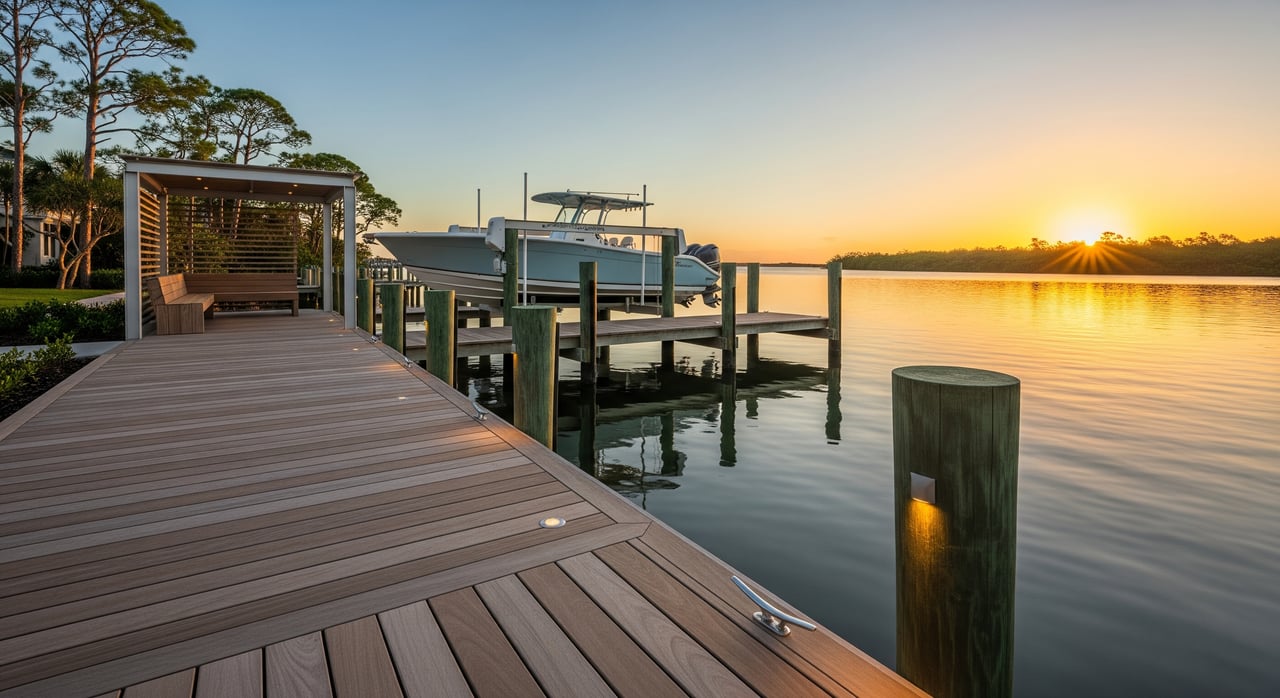
You picture stepping off your back patio and onto your own dock in Hobe Sound. Then you hear about seagrass, manatees, and three different permits, and the dream starts to feel complicated. You are not wrong. Hobe Sound sits on sensitive waters, and dock projects face close review. In this guide, you will learn who regulates docks, the permit paths, the design rules that decide feasibility, and the common pitfalls to avoid. Let’s dive in.
Who regulates docks in Hobe Sound
Florida DEP and ERP
Florida’s Department of Environmental Protection (DEP) runs the Environmental Resource Permitting program, which covers most docks, dredge or fill, and use of submerged lands. Many simple single‑family docks can qualify for DEP’s online self‑certification if strict limits are met. Review the DEP ERP and self‑cert guidance before you plan design or schedule. Explore DEP ERP and self‑certification.
Board of Trustees for submerged lands
Even if your dock is simple, using state‑owned submerged lands can require a lease, letter of consent, or easement from the Board of Trustees, administered by DEP’s Division of State Lands. Lease terms and fees are set by statute. See Florida Statutes section 253.0347.
U.S. Army Corps of Engineers
Work in navigable waters can need federal authorization under Section 10 or Section 404. Many private docks fit within nationwide permits, but dredging or larger impacts can trigger an individual permit. Review the Jacksonville District regulatory source book and regional conditions.
Martin County local permits
Martin County reviews local environmental applications, including shoreline stabilization and related work, through its Accela portal. Expect to submit surveys and site plans. Visit Martin County environmental applications.
Manatees and refuges
Manatee protection zones and nearby refuges shape where and how you can build and operate. Hobe Sound lies near sensitive habitat, including the Nathaniel P. Reed Hobe Sound National Wildlife Refuge. Check FWC manatee zone rules for Martin County and learn about the Hobe Sound refuge.
Permit paths at a glance
- Self‑certification for small single‑family docks if all criteria are met. Start with DEP’s ERP e‑Permitting.
- Noticed general permit or individual ERP for larger or sensitive projects. See the general permit rule for docks. Read FAC 62‑330.427.
- Board of Trustees authorization for use of sovereignty submerged lands when required. Review s. 253.0347.
- U.S. Army Corps verification under nationwide permits or an individual permit. See Jacksonville District guidance.
- Martin County environmental approvals via Accela. County portal.
Key design rules that drive feasibility
Dock length and platform size
Private docks are commonly limited to no more than 20 percent of the waterbody width or 500 feet waterward of mean high water, whichever is less. Terminal platforms for single‑family docks are often limited in size in statewide standards. Site conditions in aquatic preserves can tighten these limits further. See aquatic preserve standards in FAC 18‑20.004.
Side setbacks and marginal docks
Standard side setbacks from riparian lines are typically 25 feet. A marginal dock that runs parallel and close to the shoreline can have reduced setbacks, but adding a lift or mooring pilings may change the classification and the required setback. Lots with less than 65 feet of shoreline can be treated differently. Review sovereignty submerged lands standards.
Seagrass and light penetration
If your dock crosses seagrass, design must minimize shading and contact. Rules commonly require narrow boards, spacing between planks, and additional elevation over resources. You will likely need a benthic survey and may need mitigation if impacts cannot be avoided. Read aquatic preserve dock criteria.
Depth, draft and mooring clearance
Permits look at water depth and vessel draft. Mooring and turning areas must provide clearance over seagrass and bottom habitat, and you cannot extend indefinitely to chase deeper water. See aquatic preserve standards.
Mangroves and shoreline vegetation
Trimming or altering mangroves is tightly regulated. Many projects need DEP authorization unless the work meets narrow exemptions. Review DEP mangrove guidance.
Manatee protection and operating limits
Martin County manatee zones limit speed and can influence dock and slip approvals, especially in narrow channels or high‑use habitat. Check FAC 68C‑22.024.
Proximity to protected areas
Projects near the Hobe Sound refuge or within aquatic preserves often require extra coordination and stricter design. Learn more about the refuge.
Pitfalls that slow or sink projects
- Assuming riparian ownership guarantees a dock. Use of submerged lands is regulated and may require a lease or consent. Background on riparian rights.
- Misclassifying a marginal dock, then adding a lift that triggers wider setbacks and new permits. Overview of sovereign submerged land rule changes.
- Skipping a benthic survey and discovering seagrass late, which forces redesign or mitigation. DEP dock permitting guidance.
- Starting work before all authorizations are final, which risks stop‑work orders and fines. USACE regulatory guidance.
- Underestimating timeline, neighbor comments, or documentation requirements, which can add months. Industry timeline overview.
- Ignoring seasonal wildlife constraints like sea turtle nesting windows and lighting rules. FWC sea turtle season overview.
Your first steps to start right
-
Get a current boundary and topographic survey that shows mean high and mean low water and riparian lines. Martin County application page.
-
Do early outreach to agencies. Speak with DEP’s Southeast District, the Division of State Lands, USACE Jacksonville District, Martin County Environmental Services, and review manatee zones. DEP pre‑application guidance.
-
Commission a marine or benthic survey to map seagrass, depth and bottom type. DEP dock guidance.
-
Check your shoreline length and plan for side setbacks. If you will need a variance or consent from neighbors, start those conversations early. Submerged lands standards.
-
Design to minimize shading and impacts. Consider narrow decking, plank spacing, grated surfaces, and extra elevation where required. FAC 18‑20.004 criteria.
-
Assemble a complete application package. Include surveys, plans, vessel specs, benthic report, ownership documents, and any mitigation plans. Martin County submittal guidance.
-
Budget for fees and contingencies. This can include survey costs, application and processing fees, potential submerged‑lands lease fees, and mitigation for impacts. DEP submerged‑lands FAQ.
-
Choose the correct permit path. Confirm whether you qualify for DEP self‑certification, a general permit, or an individual ERP, and whether USACE needs pre‑construction notification. DEP ERP e‑Permitting.
-
Check proximity to protected areas like the Hobe Sound refuge and plan consultation if needed. Refuge overview.
Timelines and what to expect
- Self‑certified single‑family docks can move relatively fast if you clearly meet criteria and submit a complete package. Expect a few weeks to about a month. DEP ERP e‑Permitting.
- State general permits and county reviews often take weeks to a few months. Incomplete submittals are the number one cause of delay. DEP dock permitting guidance.
- USACE verifications or individual permits commonly take multiple months. Projects with dredging, mitigation, or endangered species consultation can extend to 6 to 12 months or more. USACE guidance.
The team you may need
- Marine surveyor or benthic ecologist for seagrass and bottom mapping. DEP dock guidance.
- Licensed marine contractor with Florida dock experience. Industry overview.
- Coastal or structural engineer when required for loads, waves and storms. DEP dock guidance.
- Permit specialist or environmental consultant to coordinate multi‑agency packages. DEP pre‑application guidance.
- Real estate or land‑use attorney if riparian lines or submerged‑lands leases become complex. Riparian rights background.
Final thoughts for Hobe Sound waterfront owners
Building a dock here is not just construction. It is about aligning your design with sensitive waters, manatee zones, and multiple agencies. If you plan ahead, get the right surveys, and choose the correct permit path, you can save months and reduce risk.
If you are weighing a Hobe Sound home with dock potential or preparing to sell a waterfront property, local insight can help you set expectations and value. For thoughtful, hands‑on guidance tailored to Northern Palm Beach County and Martin County waterfronts, connect with Stefan Levine P.A..
FAQs
Do I need a permit for a small single‑family dock in Hobe Sound?
- Many small docks can use DEP’s online self‑certification if every criterion is met, so start by reviewing DEP ERP and self‑cert guidance.
How far can a private dock extend in the Indian River Lagoon near Hobe Sound?
- Private docks are commonly limited to 20 percent of the waterbody width or 500 feet from mean high water, whichever is less, with site‑specific limits in preserves per FAC 18‑20.004.
What happens if there is seagrass where I want my dock?
- You will likely need a benthic survey and a design that minimizes shading and contact, with possible mitigation, as outlined in aquatic preserve criteria and DEP dock guidance.
Do boat lifts change my setback or permit needs?
- Adding lifts or mooring pilings can shift a marginal dock into a different category with wider side setbacks and new permit requirements per submerged lands standards.
Will I need a lease to use state submerged lands under my dock?
- Many private residential uses require an authorization such as a lease or letter of consent from the Board of Trustees, with terms set in s. 253.0347.
How long do dock permits take in Martin County?
- Simple self‑cert projects can take weeks, while state general permits and county reviews can take months, and USACE individual permits may run 6 to 12 months or more per DEP and USACE guidance.
Do manatee protection zones affect dock approvals in Hobe Sound?
- Yes, Martin County speed and operation zones can influence dock location, slip approvals and vessel use, so check FWC’s Martin County manatee rules early in design.
If you are interested in Waterfront living and have questions about the lifestyle, Connect with me here, Stefan Levine PA
